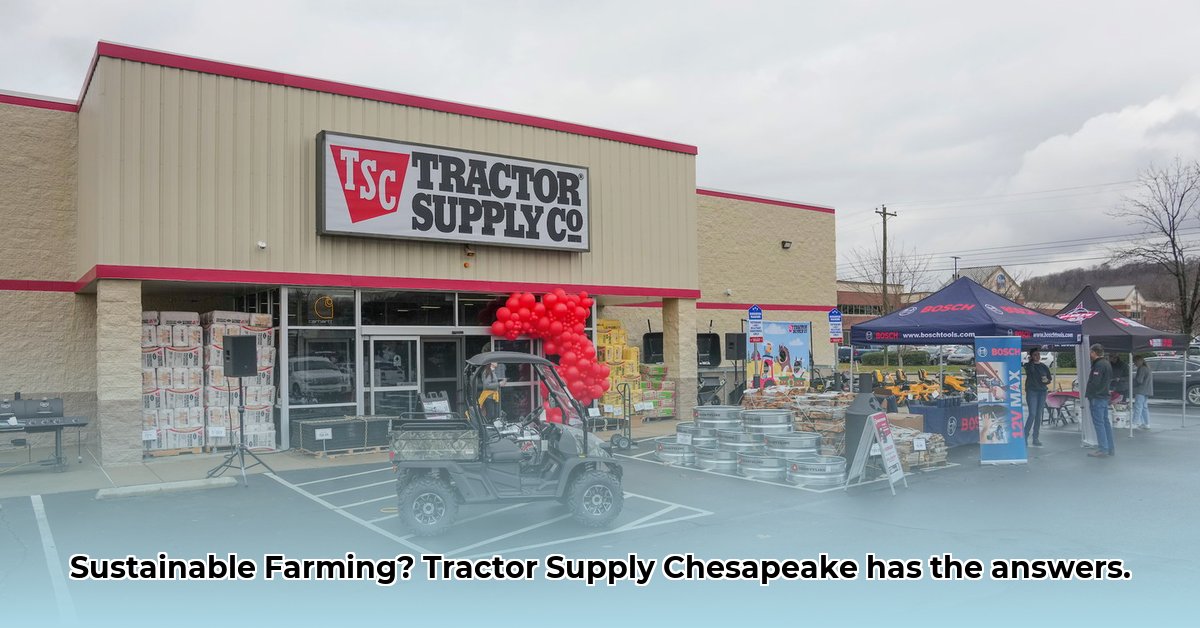
Tractor Supply (TSC) in Chesapeake is more than just a farm supply store; it's a vital resource for local farmers and gardeners striving for sustainable practices. This guide explores how TSC can better support sustainable agriculture while offering practical steps for both TSC and its customers to cultivate a more eco-friendly approach. For more information on different tractor types, see this helpful guide.
TSC Chesapeake: Partnering for Sustainable Agriculture
The neatly stacked hay bales at TSC Chesapeake represent more than just readily available supplies; they symbolize the potential for supporting local, sustainable farming. However, a closer look reveals a need for more explicit integration of sustainable practices into both TSC's offerings and its customer outreach.
Bridging the Gap: Opportunities for TSC
While TSC provides essential farming supplies, a significant opportunity lies in enhancing its support for sustainable agriculture. Currently, identifying and accessing explicitly sustainable products is not always straightforward. A more proactive approach is needed.
A Roadmap to Sustainable Success for TSC Chesapeake
TSC can dramatically enhance its role in supporting sustainable farming by implementing these key strategies:
Deepen Local Understanding: Conduct thorough research—interview local farmers, attend agricultural events, and analyze data on Chesapeake's specific soil and water conditions—to truly grasp the unique needs of sustainable farmers in the area. Understanding these challenges – such as water scarcity or soil erosion – is vital to providing relevant, effective solutions.
Enhance Sustainability Visibility: Revamp the TSC website to clearly showcase eco-friendly products. Organize products by sustainable attributes (e.g., "organic seeds," "drought-resistant plants," "reduced-impact fertilizers"). Include detailed descriptions highlighting the environmental benefits of each product. For example, emphasize products made from recycled materials or those that minimize water usage.
Fortify Community Partnerships: Collaborate with local organic farms to offer locally sourced seeds, fertilizers, and even produce. This mutually beneficial partnership bolsters TSC's credibility as a supporter of sustainable agriculture while providing a valuable resource to Chesapeake farmers.
Expand Eco-Friendly Inventory: Increase the selection of sustainable products, including organic fertilizers, water-efficient irrigation systems, and tools suitable for no-till farming. Cater to the growing demand for environmentally conscious farming practices.
Empower Through Education: Host workshops and educational events on sustainable agriculture practices like water conservation, soil health improvement, and integrated pest management. Offering consultations with local agricultural experts further empowers farmers to successfully adopt sustainable techniques.
Your Role in Sustainable Farming: Actionable Steps
Consumers play a critical role in promoting sustainable agriculture. How can you maximize your impact?
Voice Your Preferences: Let TSC know what sustainable products you need. Request specific items and suggest improvements to the website and in-store organization. This direct feedback influences TSC's purchasing decisions.
Support Sustainable Businesses: Prioritize purchasing from businesses committed to sustainability. This market-driven approach incentivizes more companies to adopt eco-friendly practices.
Become an Informed Consumer: Utilize available educational resources (from TSC or other organizations) to learn about sustainable farming methods. Knowledge empowers you to make informed decisions.
TSC Chesapeake: A Balanced Perspective
While TSC provides a convenient access point for farming supplies, improvements are needed to more fully support local sustainable agriculture.
| Strengths | Areas for Improvement |
|---|---|
| Wide variety of essential farm supplies | Limited availability of clearly labeled, sustainable product options |
| Convenient location | Website lacks comprehensive categorization and description of eco-friendly options |
| Unintentional support for local farmers | Insufficient partnerships with local sustainable agriculture organizations |
The pathway to sustainable agriculture requires a collaborative effort. TSC, local farmers, and conscious consumers are all vital components of this shared mission. By working together, we can foster a more vibrant and ecologically responsible farming community in Chesapeake.
Key Takeaways:
- Spring planning is essential for successful harvests in the Chesapeake area.
- Integrating traditional farming methods with sustainable practices is crucial for long-term success and environmental responsibility.
- While Tractor Supply offers numerous essential supplies, a more deliberate selection of sustainable alternatives is needed.
- Local resources and community collaborations are essential for thriving, environmentally responsible farming.